
The Art of Warfare: A Deep Dive into Sun Tzu’s Classic
Sun Tzu’s timeless treatise, often found as a PDF resource, remains profoundly relevant, advocating meticulous planning and intelligence gathering for success in any competitive endeavor.
Historical Context of The Art of War
The Art of War emerged during the late Spring and Autumn period (771 to 476 BCE) of ancient China, a time characterized by near-constant warfare between numerous independent states. This era demanded sophisticated military thinking, as survival hinged on strategic prowess and efficient resource management. Sun Tzu’s work reflects this turbulent landscape, offering insights into the challenges faced by commanders navigating complex political alliances and limited resources.
Accessing a PDF version today allows modern readers to connect with this historical context, understanding that the text wasn’t born in a vacuum. It was a practical guide, shaped by the realities of ancient Chinese conflict. The frequent mentions of deception and intelligence highlight the importance of these elements when facing stronger adversaries – a common situation for many states during this period. Studying the historical backdrop enriches the interpretation of Sun Tzu’s strategies.
Sun Tzu: The Author and His Time
Sun Tzu, traditionally believed to have lived during the 5th century BC, remains a somewhat enigmatic figure. Historical records offer limited concrete details about his life, contributing to a degree of legendary status. He is often portrayed as a brilliant military strategist who served as a general and advisor to the King of Wu. However, some scholars debate his very existence, suggesting “Sun Tzu” might represent a collective of military thinkers.
Regardless of his biographical details, the enduring value of The Art of War – readily available as a PDF – lies in its timeless principles. His work transcends specific historical circumstances, offering universal lessons applicable to conflict and competition. Examining a PDF copy allows for focused study of his core ideas, divorced from biographical speculation, and appreciating the strategic depth of his insights within the context of his era.

Core Principles of Sun Tzu’s Philosophy
Sun Tzu’s core philosophy, meticulously detailed in works often accessed as a PDF, centers on avoiding direct confrontation whenever possible. He prioritizes strategic positioning, deception, and understanding both one’s own strengths and weaknesses, as well as those of the opponent. A key tenet is achieving victory with minimal losses, emphasizing efficiency and calculated risk.

Studying The Art of War – easily found in PDF format – reveals a focus on intelligence gathering and adaptability. Sun Tzu advocates for knowing the terrain, the weather, and the enemy’s dispositions. His principles aren’t solely about military tactics; they extend to negotiation, leadership, and any situation involving strategic interaction. The PDF version facilitates close analysis of these enduring concepts.
Laying Plans: Strategic Assessment & Preparation
Sun Tzu’s work, often available as a convenient PDF, stresses thorough assessment before conflict, demanding detailed planning and understanding of all relevant factors.
Estimating Strength: Assessing Your Resources
Sun Tzu’s The Art of War, frequently accessed as a PDF, emphasizes a brutally honest self-assessment as the foundation of any successful strategy. Before engaging, a commander must meticulously catalogue all available resources – manpower, supplies, weaponry, and even the morale of their troops.
This isn’t merely a quantitative exercise; qualitative factors are equally crucial. What are the strengths and weaknesses of your soldiers? What logistical challenges exist? A realistic appraisal prevents overextension and ensures that ambitions align with capabilities.

Ignoring this principle, as the text warns, leads to inevitable defeat. A PDF version allows for detailed annotation and repeated study of these critical resource evaluations, reinforcing the importance of knowing precisely what you have to work with before committing to action. Accurate estimation is paramount.
Understanding the Enemy: Intelligence Gathering
Sun Tzu’s The Art of War, readily available as a PDF, dedicates significant attention to the vital importance of knowing your adversary. Victory isn’t solely about strength, but about exploiting the enemy’s weaknesses – and that requires comprehensive intelligence.
This extends far beyond simply knowing troop numbers. A commander must understand the enemy’s leadership, their strategies, their terrain preferences, their supply lines, and even their internal divisions. Effective intelligence gathering, as detailed in the PDF, involves utilizing spies, analyzing reports, and even cultivating informants within the enemy camp.
Without accurate information, any plan is built on sand. The text stresses that knowing the enemy allows you to choose your battles wisely and strike where they are most vulnerable, maximizing your chances of success.
Deception and Misdirection in Warfare
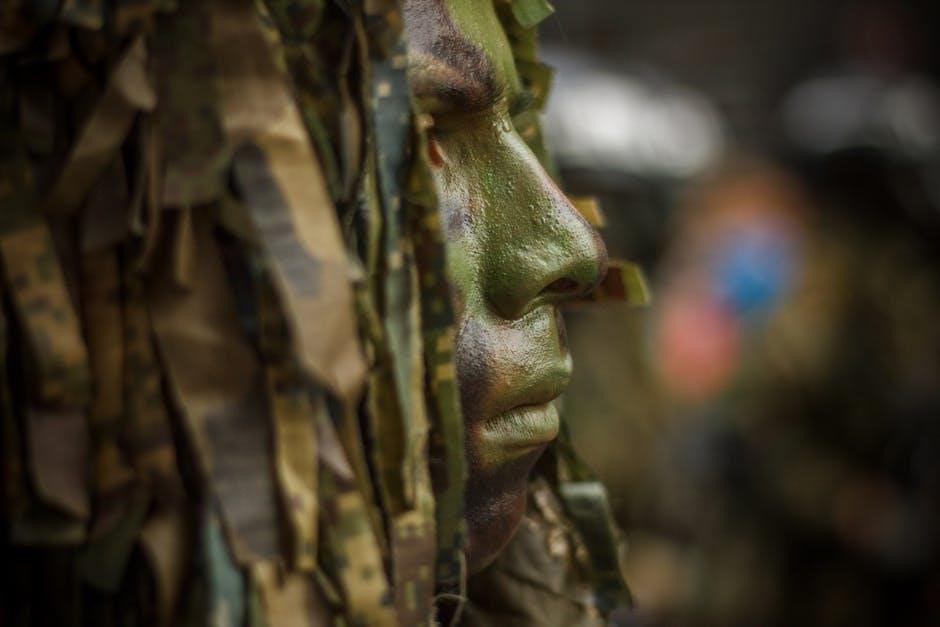
Sun Tzu’s The Art of War, often studied via PDF versions, emphasizes that all warfare is based on deception. Appearing weak when you are strong, and strong when you are weak, is paramount to misleading the enemy and achieving strategic advantage.
This isn’t merely about lying; it’s about creating illusions. Feigned retreats, spreading false rumors, and concealing your true intentions are all tactics detailed within the PDF. The goal is to manipulate the enemy’s perceptions, causing them to miscalculate and make errors.
By understanding how to exploit the enemy’s assumptions and biases, a commander can dictate the terms of engagement and gain a decisive edge. Masterful deception, as outlined in the text, can turn a seemingly unfavorable situation into a resounding victory.
Waging War: Operational Considerations
Sun Tzu’s The Art of War, readily available as a PDF, stresses swift, decisive action, avoiding prolonged conflicts that drain resources and morale.
Attack by Stratagem: Avoiding Prolonged Conflict
Sun Tzu’s core tenet, extensively detailed in The Art of War – often accessed as a convenient PDF – prioritizes victory through strategic maneuvering and minimizing direct, drawn-out engagements. Prolonged warfare, he argues, is a costly endeavor, depleting national treasuries and eroding the will of the people.
The ideal approach, as outlined in the text, involves subduing the enemy without fighting, achieved through skillful deception, exploiting weaknesses, and disrupting their plans. A swift, decisive victory is far superior to a protracted struggle. This principle isn’t merely about military tactics; it’s a philosophy applicable to any competitive situation, emphasizing efficiency and resourcefulness. The PDF version allows for easy reference to these crucial strategies.
Tactical Dispositions: Choosing the Right Formation
Sun Tzu, in The Art of War – readily available as a PDF – emphasizes that victory isn’t solely about strength, but about adapting to circumstances and exploiting the enemy’s vulnerabilities. This hinges on selecting the appropriate tactical disposition. He details various formations, not as rigid structures, but as flexible responses to the terrain, enemy strength, and your own capabilities.
Understanding when to be compact or dispersed, when to advance or retreat, is paramount. A skilled commander doesn’t force a formation; they choose the one that best suits the situation. The PDF provides detailed analysis of these dispositions, highlighting their strengths and weaknesses. Mastering these principles allows for maximizing efficiency and minimizing losses, ultimately leading to a favorable outcome.
Energy (Shih): Utilizing Momentum and Timing
Sun Tzu’s concept of Shih, often explored in PDF versions of The Art of War, transcends mere physical strength. It represents the skillful exploitation of momentum and timing – the opportune moment to strike, or conversely, to remain still. Shih isn’t created, but rather discovered and harnessed by a perceptive commander.
This involves recognizing the enemy’s weaknesses and capitalizing on their vulnerabilities when they are least prepared. A successful attack isn’t about brute force, but about delivering a decisive blow at the precise moment, maximizing impact and minimizing resistance. The PDF illustrates how manipulating tempo and creating imbalances are crucial for achieving victory, turning potential disadvantages into advantages.

Attack by Stratagem: The Art of Subterfuge
PDF analyses of The Art of War emphasize that superior generals win before fighting, employing deception and exploiting enemy weaknesses for strategic advantage.
Spies and Information Networks
Sun Tzu dedicates a significant portion of The Art of War, readily available in PDF format, to the crucial role of espionage. He outlines five distinct types of spies – local, inward, converted, doomed, and surviving – each serving a unique purpose in gathering intelligence.
Effective spy networks, according to the text, are paramount for understanding the enemy’s strengths, weaknesses, and intentions without engaging in direct conflict. A successful campaign hinges on accurate information, and spies are the primary means of obtaining it.
The PDF versions often highlight the importance of managing these agents discreetly, rewarding them generously, and protecting their identities at all costs. Furthermore, Sun Tzu stresses the need to analyze the information received critically, discerning truth from falsehood to avoid being misled. Ultimately, a well-cultivated intelligence network provides the strategic advantage needed to secure victory.
Creating Illusions and Exploiting Weaknesses
Sun Tzu’s The Art of War, frequently accessed as a PDF, emphasizes deception as a cornerstone of successful strategy. Creating illusions – appearing weak when strong, and strong when weak – is vital to mislead the enemy and exploit their vulnerabilities. This involves carefully crafting perceptions to influence their decision-making.
The text details how to feign disorder to lure opponents into traps, and to project confidence even when facing unfavorable odds. A PDF study of the work reveals that understanding the enemy’s psychological state is as important as knowing their military capabilities.
By identifying and magnifying their weaknesses, while concealing your own, you can dictate the terms of engagement and achieve victory with minimal losses. This masterful manipulation of perception is central to Sun Tzu’s philosophy of warfare.
The Importance of Knowing When to Fight (and Not Fight)
A core tenet of Sun Tzu’s The Art of War, readily available as a PDF, is the critical understanding of when to engage in conflict and, crucially, when to abstain. Victory isn’t solely about winning battles; it’s about avoiding unnecessary confrontations that deplete resources and weaken your position;
The PDF version highlights that a skilled commander prioritizes strategic advantage over impulsive aggression. Knowing your limitations and the enemy’s strengths dictates whether a battle is winnable, or should be avoided altogether.
Sun Tzu advocates for choosing battles carefully, only engaging when the odds are demonstrably in your favor. Prolonged warfare is to be avoided, and swift, decisive action is preferred, but only when strategically sound. This principle is fundamental to preserving strength and achieving lasting success.
Tactical Dispositions: Adapting to the Terrain
Sun Tzu’s The Art of War PDF emphasizes adapting strategies to diverse terrains, recognizing how landscapes profoundly influence military operations and dictate success.
Types of Terrain and Their Impact on Strategy
Sun Tzu’s The Art of War, readily available as a PDF, meticulously categorizes terrain, highlighting its crucial role in strategic decision-making. He identifies six types: accessible ground, entangling ground, temporizing ground, narrow passes, precipitous heights, and positions at a great distance from the enemy.
Accessible ground allows for free movement, favoring swift offensives. Entangling ground, however, hinders progress, demanding caution. Temporizing ground calls for calculated advances, while narrow passes necessitate speed and surprise. Precipitous heights offer defensive advantages, and distant positions require logistical prowess.
Understanding these distinctions, as detailed in the PDF version, is paramount; a commander must adapt tactics to exploit terrain’s benefits and mitigate its drawbacks, ensuring victory through informed positioning and maneuverability. Ignoring terrain is a path to defeat.
Utilizing Terrain to Your Advantage
Sun Tzu’s The Art of War, often studied via PDF copies, emphasizes manipulating terrain to gain a decisive edge. He advocates thoroughly assessing the landscape – mountains, rivers, marshes – and leveraging its features to enhance your strengths while exploiting enemy weaknesses.
Employing terrain defensively means choosing positions that funnel attacks or offer natural barriers. Offensively, it involves selecting routes that conceal movements, create ambushes, or disrupt enemy supply lines. A skilled commander, as outlined in the PDF, doesn’t merely react to terrain but actively uses it.
This includes understanding how weather impacts terrain, and anticipating how the enemy will attempt to utilize or circumvent it. Mastery of terrain, according to Sun Tzu, is fundamental to achieving victory with minimal losses.
The Role of Discipline and Command
Sun Tzu’s The Art of War, readily available as a PDF, underscores that even the most brilliant strategy falters without rigorous discipline and effective command. A well-ordered army, he argues, responds swiftly and uniformly to directives, minimizing confusion and maximizing efficiency.
Centralized command, yet allowing for initiative at lower levels, is crucial. Leaders must inspire trust and enforce rules consistently, ensuring soldiers understand their roles and the consequences of disobedience. The PDF highlights the importance of clear communication and unambiguous orders.
Discipline isn’t merely about punishment; it’s about fostering a culture of obedience, loyalty, and unwavering commitment to the mission. A disciplined force, as Sun Tzu details, is a formidable weapon, capable of overcoming superior numbers.
The Use of Spies: The Ultimate Intelligence Asset
Sun Tzu’s The Art of War PDF emphasizes spies as paramount, providing crucial insights into enemy weaknesses and intentions for strategic advantage.
Different Types of Spies and Their Roles
Sun Tzu, within The Art of War – readily available as a PDF – delineates five distinct types of spies, each serving a critical function in intelligence gathering. These aren’t simply informants; they are categorized by their operational depth and the risks they undertake.
Local spies gather information in the enemy’s territory. Inward spies operate within your own ranks, sowing discord amongst opponents. Converted spies are initially enemy agents turned to your service. Doomed spies are sacrificed to deliver false information. Finally, living spies are the most valuable, returning with accurate, actionable intelligence.
Effectively utilizing these varied assets, as detailed in the PDF version, provides a comprehensive understanding of the enemy’s capabilities, intentions, and vulnerabilities, enabling informed strategic decisions and minimizing risks on the battlefield.

Managing and Protecting Your Spy Network
Sun Tzu’s The Art of War, often accessed as a convenient PDF, emphasizes the paramount importance of safeguarding your intelligence network. Maintaining absolute secrecy is crucial; spies must be rewarded generously for successes and treated with utmost discretion.
Protecting agents requires establishing secure communication channels and employing coded messages to prevent interception. Counter-intelligence measures are vital – anticipate enemy attempts to infiltrate or compromise your network. A robust system of verification is essential to ensure the reliability of information received.
The PDF highlights that a well-managed spy network isn’t merely about gathering data, but about cultivating trust, ensuring operational security, and mitigating the inherent risks associated with espionage, ultimately bolstering strategic advantage.
The Ethical Considerations of Espionage
While Sun Tzu’s The Art of War, readily available as a PDF, focuses on strategic advantage, it implicitly raises ethical questions regarding espionage. The text doesn’t explicitly address morality, but the reliance on deception and the potential for harm necessitate consideration.
Employing spies involves inherent risks – betrayal, manipulation, and potential loss of life. A leader must weigh the benefits of intelligence against the moral implications of its acquisition. Is any information worth compromising one’s principles?
The PDF version prompts reflection on the balance between national security and ethical conduct. Though focused on victory, a truly skilled commander understands that long-term success depends on maintaining a degree of integrity, even within the shadows of warfare.