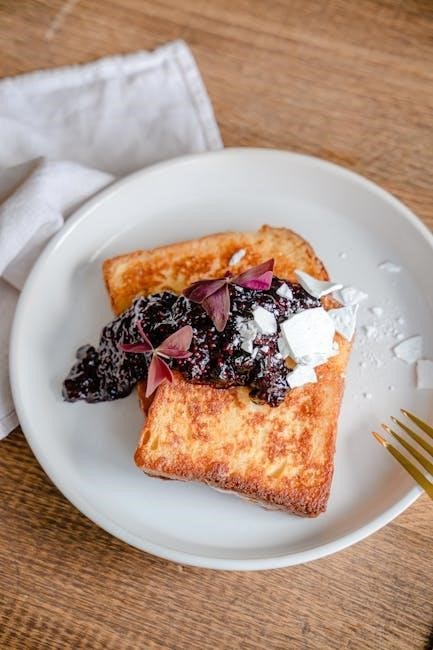
French Toast Size Guide: A Comprehensive Overview (12/06/2025)
Navigating French toast portioning involves considering bread type, age, and accompanying sides. Standard servings typically range from one to two slices, adjusting for individual needs and preferences.

Determining the appropriate French toast portion isn’t simply about the number of slices; it’s a nuanced consideration of several factors. A satisfying French toast experience hinges on balancing flavor, fullness, and the overall meal composition. Historically, a diner-style serving of two slices has been the standard, offering a hearty start to the day.
However, modern dietary needs and preferences necessitate a more flexible approach. Portion sizes should be adjusted based on age, activity level, and the density of the bread used. Thick-cut breads, like challah or Texas toast, are more filling than standard white bread, requiring smaller portions.
Understanding these variables allows for a personalized French toast experience, ensuring everyone enjoys a delicious and satisfying meal without overindulging. This guide will explore these aspects in detail, providing a comprehensive overview of French toast portioning.
Why French Toast Size Matters
French toast portion size significantly impacts nutritional intake and satiety. Overly large portions can lead to excessive calorie consumption, potentially contributing to weight gain. Conversely, too small a portion may leave individuals feeling unsatisfied and prone to overeating later.

Appropriate sizing also considers the bread’s absorption rate. Highly saturated slices, especially with richer breads, are more filling. Adjusting the portion prevents discomfort. Serving size influences the balance of the meal; larger portions may necessitate fewer side dishes, while smaller portions benefit from complementary foods like fruit or protein.
Mindful portioning promotes a healthier relationship with food, encouraging enjoyment without guilt. It’s about finding the sweet spot – a portion that’s both delicious and nutritionally responsible, catering to individual needs and preferences for a truly satisfying breakfast.
Standard French Toast Serving Sizes
Generally, a standard serving consists of two slices of regular-sized bread, commonly found in diners. This portion provides a satisfying meal for most adults.
The “Classic” Two-Slice Serving
The quintessential French toast experience often centers around a two-slice serving, a benchmark established in countless diners and breakfast establishments. This portion size isn’t arbitrary; it strikes a balance between satisfying hunger and avoiding excessive fullness. It’s considered a standard for a reason, providing a substantial yet manageable breakfast or brunch option.
However, the perceived “classic” serving is heavily influenced by the bread used. Two slices of standard white bread will naturally be less filling than two slices of thicker-cut challah or brioche. Therefore, while two slices remain the common denominator, adjustments are often necessary based on bread density and individual appetite. This classic serving is best enjoyed with complementary sides like fresh fruit, a protein source such as bacon or sausage, and a drizzle of maple syrup.
Ultimately, the two-slice serving represents a reliable starting point for enjoying this beloved breakfast dish, offering a familiar and comforting experience for most palates.
Serving Size Based on Bread Type
Bread selection dramatically impacts appropriate French toast serving sizes. Denser, richer breads necessitate smaller portions compared to lighter varieties. A high-rising, sturdy bread like challah, known for its substantial texture, often satisfies with just one or two slices due to its inherent fullness. Conversely, standard white bread may require three slices to achieve a comparable level of satiety.
Similarly, brioche, with its high egg and butter content, delivers a richer, more decadent experience, meaning a smaller serving – perhaps one and a half slices – is often sufficient. Texas toast, famed for its extra-large portions, naturally demands a reduced slice count; one slice can easily constitute a full serving.
Considering the bread’s thickness is also crucial; A thinner slice requires more pieces to equal the volume of a thicker one. Adapting the serving size to the bread type ensures a balanced and satisfying French toast experience.
Challah Bread & Larger Slices
Challah, a beloved choice for French toast, boasts a dense yet tender crumb and a subtly sweet flavor. Due to its richness and substantial texture, serving sizes with challah can be more modest. Typically, one to two slices of challah, cut approximately 5/8 inch thick, constitute a satisfying portion for an adult.
Larger slices of challah, common in some bakeries, may even warrant reducing the serving to a single slice, especially when paired with substantial sides like bacon or sausage. The bread’s inherent density prevents it from feeling light or unsatisfying, even in smaller quantities.
When using challah, prioritize quality; a high-rising loaf will yield the best results. Remember that challah’s richness means it’s more filling, so adjusting portion sizes accordingly prevents overeating and maximizes enjoyment.
Brioche & Richer Breads
Brioche and other exceptionally rich breads, like Hawaiian bread, demand careful consideration when determining French toast serving sizes. Their high butter and egg content contribute to a remarkably decadent and filling experience. Consequently, smaller portions are generally recommended compared to leaner bread varieties.
One slice of brioche, particularly if thickly cut, often provides ample satisfaction for a single serving. The bread’s inherent sweetness and luxurious texture mean it doesn’t require large quantities to deliver a delightful breakfast or brunch. Overindulging can quickly lead to feeling overly full.
When utilizing these richer breads, focus on quality over quantity. A single, perfectly prepared slice of brioche French toast, served with fresh fruit and a touch of syrup, can be far more enjoyable than a larger portion of lesser-quality bread.
Texas Toast & Extra-Large Portions
Texas toast, renowned for its substantial size and thickness, significantly impacts French toast serving sizes. Due to its sheer volume, even a single slice can constitute a complete and satisfying meal for many individuals. When using Texas toast, portion control is paramount to avoid overeating.
Typically, half a slice of Texas toast, cut into manageable pieces, is sufficient for a standard adult serving. The bread’s density and richness mean it’s considerably more filling than thinner, lighter varieties. Adjusting the portion size based on accompanying sides is also crucial.
If serving Texas toast French toast with a full breakfast spread – including bacon, sausage, and fruit – a smaller portion is advisable. Prioritize quality ingredients and careful preparation to maximize enjoyment without excessive indulgence. Remember, a little goes a long way with this hearty bread!

French Toast Size for Different Age Groups
Adjusting French toast portions based on age is essential. Children need smaller servings, while teenagers and adults require more, considering activity levels and appetite.
Children’s French Toast Portions
Determining appropriate French toast portions for children requires careful consideration of their smaller stomachs and varying activity levels. A single slice of French toast is often sufficient for younger children, providing a satisfying yet manageable breakfast or brunch. It’s crucial to prioritize a balanced meal, pairing the French toast with protein sources like yogurt or a small serving of scrambled eggs, alongside a portion of fresh fruit to ensure adequate nutritional intake.
Focusing on providing a nutritious and enjoyable experience is key. Avoid overly large portions that could lead to waste or discomfort. Consider the child’s individual appetite; some may happily consume a half slice more, while others may only manage a few bites. Remember that French toast, while delicious, is relatively high in carbohydrates and sugar, so moderation is important. Offering a variety of healthy sides helps to create a well-rounded and energizing meal for growing children.
Always supervise young children while they eat, and cut the French toast into smaller, bite-sized pieces to prevent choking hazards.
Teenagers & Growing Appetites
Adolescents, experiencing rapid growth and increased physical activity, naturally require larger portions than younger children. One and a half to two slices of French toast generally constitute an appropriate serving size for teenagers, though individual needs can vary significantly based on their metabolism, activity level, and overall dietary habits. It’s essential to provide enough fuel to support their energy demands.
Pairing French toast with substantial sides is crucial. Consider adding protein-rich options like bacon, sausage, or a side of eggs to promote satiety and support muscle development. A serving of fruit provides essential vitamins and fiber, contributing to a balanced meal. Encourage teenagers to listen to their bodies and eat until they are comfortably full, rather than overeating.
Remember that teenagers often have busy schedules, so a hearty breakfast is vital. French toast can be a quick and convenient option, but ensuring it’s part of a nutritious meal is paramount for their overall health and well-being.
Adult French Toast Serving Recommendations
For most adults, a standard serving of French toast consists of two slices of bread, offering a satisfying and balanced breakfast or brunch option. However, individual caloric needs and activity levels play a significant role in determining the ideal portion size. Those with higher energy expenditures may benefit from slightly larger servings.
Consider the accompanying sides when assessing portion control. A complete meal should include protein, such as bacon, sausage, or a side of eggs, alongside fruit or vegetables for added nutrients and fiber. This combination promotes satiety and provides a well-rounded nutritional profile.
Quality ingredients, like challah or brioche, can enhance the experience, but also tend to be richer. Adjust portion sizes accordingly to maintain a healthy diet. Mindful eating and listening to your body’s hunger cues are key to enjoying French toast as part of a balanced lifestyle.
Factors Influencing French Toast Serving Size
Bread thickness, density, and egg mixture saturation significantly impact portion sizes. Accompanying sides and the overall meal composition also determine appropriate servings.
Bread Thickness & Density
The thickness and density of the bread are paramount when determining a suitable French toast serving size. A denser, more substantial bread, like challah or brioche, will naturally feel more filling than a lighter, airier variety. When using a sturdy, high-rising bread, a 5/8-inch slice is often considered ideal, providing enough structure to soak up the egg mixture without becoming soggy.
Thicker slices generally require more saturation to ensure a consistently flavorful and textured result. Conversely, thinner slices may become overly saturated and fall apart during cooking. The density also plays a role; a dense bread will hold its shape better and provide a more substantial bite, potentially allowing for a slightly smaller portion size compared to a less dense option.
Ultimately, adjusting the serving size based on the bread’s characteristics ensures a balanced and satisfying French toast experience. Consider the bread’s ability to absorb the custard and maintain its integrity throughout the cooking process.
Egg Mixture Saturation
The degree to which bread absorbs the egg mixture significantly impacts the perceived serving size. A generous soaking results in a richer, more decadent French toast, but also increases the overall volume and caloric density of each slice. Achieving the right balance is crucial for portion control.
Bread that is lightly coated will require a larger portion to achieve the same level of satisfaction as bread thoroughly bathed in the custard. The addition of flavorings like nutmeg, vanilla, and even a touch of rum enhances the experience, potentially allowing for a slightly smaller serving size as the flavor profile is more complex.
Carefully monitor the soaking time to prevent the bread from becoming overly saturated and falling apart. A gentle sauté in butter helps to set the custard and create a golden-brown exterior, further influencing the overall texture and portion appeal.
Accompanying Sides & Overall Meal
French toast is rarely consumed in isolation; the accompanying sides and the broader meal context heavily influence appropriate serving sizes. A substantial side of protein, such as bacon or sausage, can allow for a slightly smaller French toast portion, creating a balanced and satisfying breakfast.
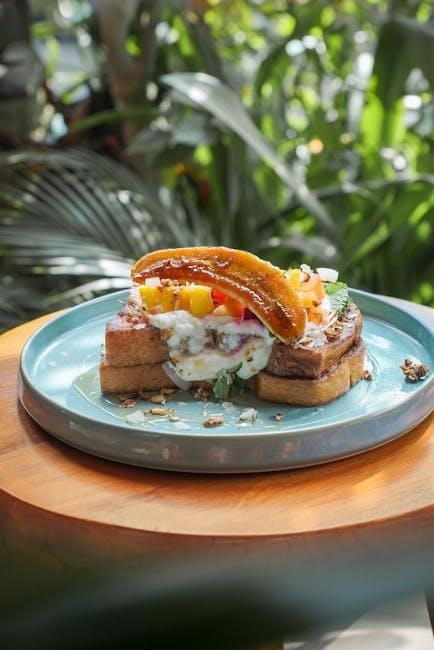
Similarly, the inclusion of fresh fruit provides natural sweetness and nutritional value, potentially reducing the need for an overly large serving of the French toast itself. Considering the entire meal composition ensures a well-rounded and appropriately portioned breakfast experience.
For a lighter meal, pairing French toast with a simple side of yogurt or a small salad can be a healthier alternative. Adjusting the portion size based on the overall caloric intake and nutritional needs is key to mindful eating and maintaining a balanced diet.

French Toast Size Variations & Styles
Variations like stuffed French toast or casseroles demand adjusted portions. Sticks offer bite-sized servings, while casseroles provide larger, shareable portions, influencing individual serving sizes.
Stuffed French Toast Portions
Stuffed French toast, a decadent variation, naturally dictates larger portion sizes due to its rich filling. Unlike traditional slices, the addition of cream cheese, fruit, or other sweet components significantly increases the overall volume and caloric density of each serving. A single piece of stuffed French toast often constitutes a complete and satisfying meal for one person.
Considering the substantial nature of this style, a standard serving typically consists of one generously sized piece, often cut in half for presentation. The bread used for stuffed French toast is frequently thicker-cut, like challah or brioche, further contributing to the larger portion. It’s crucial to balance the indulgence with lighter sides, such as fresh berries or a small salad, to create a well-rounded breakfast or brunch experience.
When preparing stuffed French toast for a group, estimating one half to one full piece per person is advisable, depending on appetites and accompanying dishes. Remember that the filling itself adds considerable weight and fullness, so smaller portions may be sufficient, especially if other substantial items are served alongside it.
French Toast Casserole Serving Sizes
French toast casserole, designed for sharing, requires a different approach to portioning than individual slices. This baked dish, often prepared with cubed bread soaked in a custard base, yields generous servings suitable for brunch gatherings or family breakfasts. Determining the appropriate serving size depends on the casserole’s depth and the richness of its ingredients.
A standard serving of French toast casserole typically ranges from ¾ cup to 1 cup, providing a substantial and satisfying portion. This equates to roughly one to two slices of traditional French toast, considering the density of the baked bread. It’s important to account for any toppings, such as fruit compote, whipped cream, or maple syrup, which add to the overall caloric intake.

When calculating quantities for a group, estimate approximately ¾ cup of casserole per person. Adjust this based on the presence of other breakfast items; if offering sides like bacon or sausage, slightly smaller portions may suffice. Pre-cutting the casserole into squares simplifies serving and ensures consistent portion control.
French Toast Sticks & Bite-Sized Servings
French toast sticks and bite-sized portions offer a playful and convenient alternative to traditional slices, particularly appealing to children or for quick breakfasts. These smaller formats necessitate adjusted serving sizes, as their ease of consumption can lead to overeating. Typically, a serving consists of 5-8 sticks, depending on their length and thickness.
Because of their dippable nature, portion control is key. A serving of 6-8 sticks provides a satisfying amount without being overly indulgent. Consider the accompanying dipping sauce – maple syrup, fruit puree, or chocolate – when determining the overall serving size, as these additions contribute to sugar intake.
For younger children, 3-5 sticks may be sufficient, paired with a side of fruit or yogurt for a balanced meal. When serving a group, pre-portioning the sticks into individual containers or small plates helps manage consumption. These bite-sized treats are ideal for parties or as a fun breakfast option.
Calculating French Toast Quantity for a Group
Estimating bread needs requires considering each person’s appetite and age. Adjust for dietary needs, and prepare efficiently by pre-soaking bread and using multiple pans.
Estimating Bread Needs
Accurately estimating bread needs for a group French toast breakfast begins with understanding individual appetites. A standard serving, as commonly found in diners, utilizes two slices of regular-sized bread per adult. However, this is a flexible guideline. For lighter eaters or those enjoying a substantial side of fruit, bacon, or sausage, one slice might suffice.
Conversely, teenagers and individuals with higher activity levels will likely appreciate – and consume – two or even two and a half slices. When planning, err on the side of generosity; leftover French toast is rarely a complaint! Consider the bread type as well. Thicker cuts, like Texas toast, or denser breads like challah, are more filling, potentially reducing the number of slices needed per person.
As a general rule, assume approximately 1.5 to 2 slices of bread per person. Multiply this number by the total number of guests to determine the total bread requirement. It’s always wise to add a few extra slices to account for unexpected appetites or seconds. Remember, a high-quality, sturdy bread is key to a successful French toast experience!
Adjusting for Dietary Restrictions
Accommodating dietary restrictions when preparing French toast requires thoughtful ingredient substitutions. For gluten-free guests, utilize gluten-free bread – ensure it’s sturdy enough to withstand soaking in the egg mixture. Many excellent gluten-free bread options are available, including challah-style varieties. Dairy-free individuals can substitute plant-based milk (almond, soy, or oat) for traditional milk in the custard base, and use plant-based butter for cooking.
Egg allergies present a greater challenge, as eggs are central to French toast. However, some recipes utilize banana or applesauce as a binder, though the texture will differ significantly. Clearly label any modified French toast to avoid confusion. Portion sizes may need adjustment based on the bread used; gluten-free breads can sometimes be less filling.
Always inquire about allergies and preferences beforehand. Offering a variety of toppings – fresh fruit, maple syrup, and dairy-free whipped cream – allows guests to customize their French toast to suit their needs. Prioritizing inclusivity ensures everyone can enjoy this classic breakfast!
Tips for Efficient French Toast Preparation
Streamlining French toast preparation, especially for larger groups, requires a strategic approach. Prepare the egg mixture in a large, shallow dish – a baking pan works well – to easily accommodate bread soaking. Pre-slice the bread and arrange it in a single layer for even saturation. Consider a staggered cooking schedule, starting with the largest batches to maintain consistent warmth.
Utilize a warming oven or baking sheet to keep cooked French toast crisp and at the ideal serving temperature. Pre-portion toppings like fruit and syrup into individual containers for self-service. Delegate tasks – one person can soak the bread, another can cook, and a third can plate and garnish.
For optimal results, avoid overcrowding the pan, which lowers the temperature and results in soggy French toast. Gentle cooking in butter ensures a golden-brown exterior and a fluffy interior. Remember, quality ingredients – like challah or brioche – elevate the final product!